If your doctor has recommended full liquid diet foods, you might be wondering what you can actually eat. Although the name sounds restrictive, a full liquid diet includes many nourishing options that are smooth enough to drink or become liquid at room temperature. It’s commonly prescribed after surgery, dental procedures, or certain medical conditions to give your digestive system time to recover while still providing calories and nutrients.
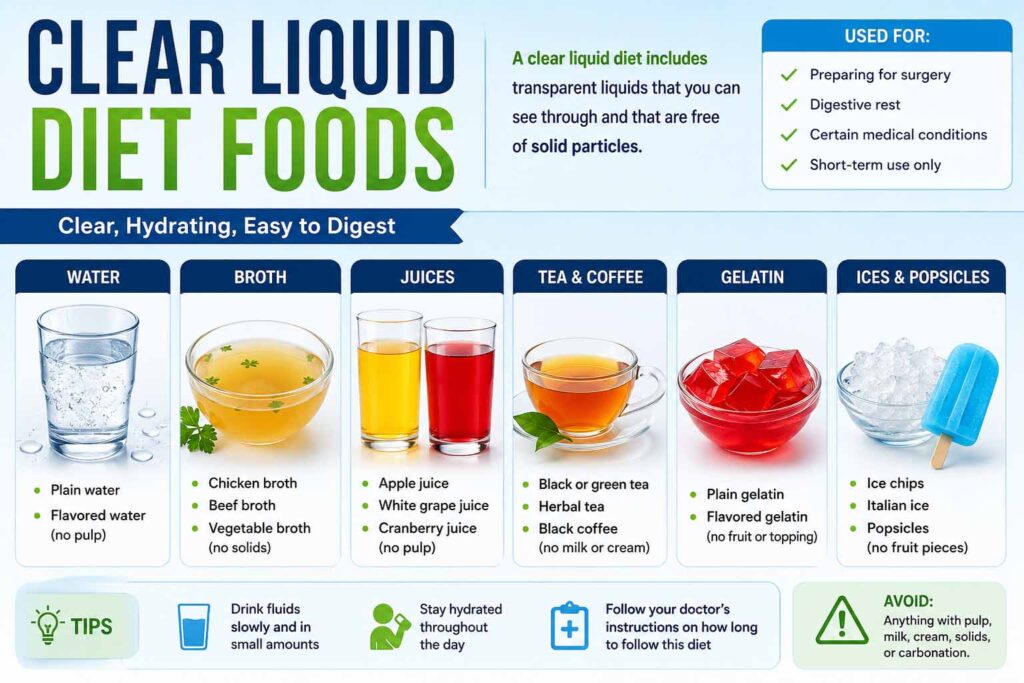
Unlike a clear liquid diet, which includes only transparent liquids, a full liquid diet allows thicker foods such as milk, strained soups, yogurt, smoothies, and nutritional shakes. For many people, this makes the diet easier to follow while supporting recovery.
What Are Full Liquid Diet Foods?
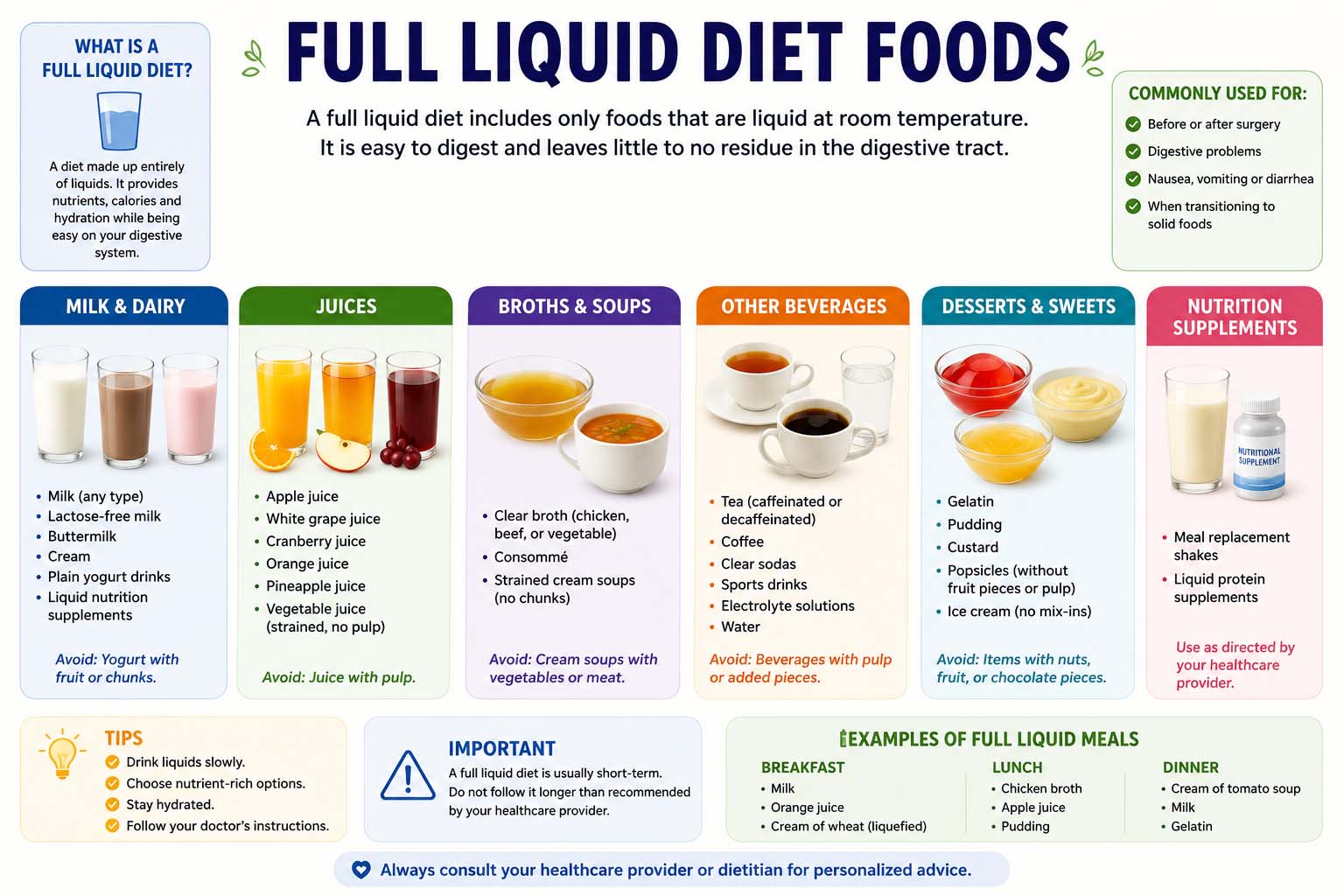
Full liquid diet foods include anything that is liquid or becomes liquid at room temperature and can be swallowed without chewing.
Healthcare providers often recommend this eating plan for a short period while someone heals or prepares for a medical procedure.
Depending on your individual health needs, your provider may adjust the diet to include more protein, calories, or vitamins.
What Foods Are Allowed on a Full Liquid Diet?
If you’re asking what foods are allowed on a full liquid diet, the list is broader than many people expect.
Common options include:
- Milk
- Lactose-free milk
- Soy milk
- Almond milk
- Oat milk
- Drinkable yogurt
- Kefir
- Smooth yogurt without fruit chunks
- Cream soups that have been strained
- Bone broth
- Vegetable broth
- Fruit smoothies without seeds
- Protein shakes
- Meal replacement drinks
- Strained oatmeal
- Cream of wheat
- Pudding
- Custard
- Ice cream without solid mix-ins
- Sherbet
- Gelatin
- Frozen yogurt after melting
- Thin mashed potatoes mixed with broth or milk
Every person’s dietary plan is different, so always follow the specific instructions provided by your healthcare team.
Who May Need a Full Liquid Diet?
A full liquid diet is usually temporary.
Your healthcare provider may recommend it after:
- Oral or jaw surgery
- Tooth extraction
- Bariatric surgery
- Certain gastrointestinal procedures
- Difficulty chewing
- Difficulty swallowing
- Recovery from illness
- Certain digestive conditions
The goal is to make eating easier while still helping your body receive enough energy and nutrients.
For some people recovering from oral procedures, drinks discussed in our guide to the benefits of pineapple juice may sound appealing. Even so, it’s best to follow your dentist’s or surgeon’s instructions because acidic beverages aren’t appropriate during every stage of healing.
Full Liquid Diet Foods List
Having a simple shopping list can make meal planning much easier.
| Food Group | Examples |
|---|---|
| Dairy | Milk, yogurt, kefir, cottage cheese blended until smooth |
| Protein | Protein shakes, meal replacement drinks, strained cream soups |
| Grains | Cream of wheat, strained oatmeal, smooth hot cereals |
| Fruits | Applesauce, strained fruit smoothies, fruit juice without pulp |
| Vegetables | Pureed vegetable soup, strained tomato soup |
| Desserts | Pudding, custard, gelatin, melted ice cream |
| Drinks | Water, tea, coffee without solid add-ins, broth |
This full liquid diet foods list provides variety while helping prevent meal fatigue during recovery.
How to Meet Your Nutritional Needs
Because a full liquid diet limits food choices, it’s possible to fall short on certain nutrients if you stay on it for an extended period.
Pay special attention to:
Protein
Protein supports wound healing, muscle maintenance, and immune function.
Good liquid sources include:
- Protein shakes
- Greek yogurt blended until smooth
- Milk
- Soy beverages
- Smooth cream soups with added protein
Calories
If your appetite is low, drinking calories can sometimes feel easier than eating.
Instead of skipping meals, try having smaller portions every two to three hours.
Hydration
Staying hydrated is just as important as getting enough calories, as proper fluid intake supports digestion, energy levels, and overall health.
Water should remain your primary beverage.
Some people also enjoy sipping warm fluids throughout the day. Our guide on the benefits of drinking warm water explains how this simple habit may support comfort and hydration, although plain water remains an excellent choice as well.
Foods for Full Liquid Diet During Recovery
Choosing satisfying foods can make recovery more comfortable.
Examples of foods for full liquid diet meals include:
Breakfast
- Cream of wheat made with milk
- Plain yogurt smoothie
- Meal replacement shake
Lunch
- Strained chicken soup
- Pureed vegetable soup
- Protein drink
Afternoon Snack
- Vanilla pudding
- Smooth applesauce
- Yogurt
Dinner
- Creamy tomato soup
- Blended potato soup
- Milk or fortified plant-based beverage
Evening Snack
- Smooth custard
- Protein shake
- Gelatin with whipped topping if permitted
Eating smaller meals throughout the day often feels easier than trying to consume large portions at once.
Tips for Making Meals More Filling
A liquid diet doesn’t have to leave you feeling hungry.
You can increase satisfaction by:
- Including protein at each meal
- Choosing milk instead of water when appropriate
- Adding powdered milk to soups
- Blending yogurt into smoothies
- Drinking meals slowly instead of rushing
Some people also ask whether fermented drinks belong on a full liquid diet. Depending on your medical instructions, products discussed in our article about the best time to drink kombucha may or may not be suitable. Because kombucha is acidic and lightly carbonated, it’s not appropriate for every recovery plan, so check with your healthcare provider first.
How Long Should You Stay on a Full Liquid Diet?
For most people, a full liquid diet is only recommended for a short period.
The exact timeline depends on:
- The reason for the diet
- Your ability to swallow comfortably
- Healing after surgery
- Your nutritional status
- Your healthcare provider’s recommendations
As your recovery progresses, your provider will usually guide you toward soft foods before you return to your regular eating pattern.
If your appetite remains poor, you lose weight unexpectedly, or you struggle to drink enough fluids, contact your healthcare team promptly. They may recommend adjustments to help you meet your nutritional needs safely.
Full Liquid Diet Foods Bariatric Recovery
After weight-loss surgery, your healthcare team will usually provide a detailed eating plan that gradually progresses from clear liquids to full liquids, soft foods, and eventually regular foods. The exact timeline varies depending on the type of bariatric procedure and your surgeon’s instructions.
Common choices may include:
- High-protein meal replacement shakes
- Skim or low-fat milk, if tolerated
- Plain Greek yogurt blended until smooth
- Strained cream soups with added protein
- Sugar-free pudding
- Smooth cottage cheese blended with milk
- Protein-enriched broths
It’s essential to sip drinks slowly rather than taking large gulps. Most bariatric programs also recommend avoiding drinking large amounts during meals, as this may cause discomfort.
Always follow your surgeon’s specific instructions, since bariatric diet stages differ from one patient to another.
Foods to Avoid on a Full Liquid Diet
Even though this diet includes more options than a clear liquid diet, many foods still aren’t suitable.
Avoid foods that require chewing or contain solid pieces, such as:
- Raw fruits and vegetables
- Whole nuts and seeds
- Popcorn
- Chips and crackers
- Bread
- Rice
- Pasta
- Chunky soups
- Tough meats
- Fried foods
- Dried fruit
It’s also wise to avoid beverages that irritate your stomach if your healthcare provider advises against them.
A Simple Daily Checklist
Following a routine can make a temporary liquid diet much easier.
Use this checklist each day:
| Goal | Check |
|---|---|
| Drink enough fluids | □ |
| Include protein with meals | □ |
| Eat every 2–3 hours | □ |
| Follow your healthcare provider’s instructions | □ |
| Monitor for nausea or discomfort | □ |
Small, regular meals are often easier to tolerate than a few large servings.
Tips for Staying Comfortable During a Full Liquid Diet
A little planning goes a long way.
Here are a few practical ideas:
Prepare Meals Ahead of Time
Keeping soups, smoothies, and protein drinks ready in the refrigerator makes it easier to stay on track.
Variety Helps Prevent Boredom
Rotate flavors and ingredients whenever your healthcare provider approves them.
For example, you might alternate between creamy vegetable soup, yogurt smoothies, pudding, and blended oatmeal.
Drink Slowly
Taking your time can reduce bloating and improve comfort, especially after surgery.
Watch Your Temperature
Some people find room-temperature foods easier to tolerate than foods that are very hot or very cold.
Common Mistakes to Avoid
Because this eating plan is temporary, it’s easy to overlook a few important details.
Skipping Protein
Protein plays a major role in healing.
Try to include a protein-rich liquid several times throughout the day if your healthcare provider recommends it.
Not Drinking Enough Fluids
Dehydration is one of the most common concerns during recovery.
Sip water regularly between meals unless your medical team advises otherwise.
Returning to Solid Foods Too Soon
It can be tempting to eat normally once you start feeling better.
However, introducing solid foods before your digestive system is ready may increase discomfort or slow recovery.
Assuming Every Liquid Is Allowed
Milkshakes loaded with sugar, alcoholic beverages, and drinks containing solid pieces may not fit your diet.
Always compare food choices with the instructions you received from your healthcare provider.
Can You Get Enough Fiber?
Fiber intake often decreases during a full liquid diet because many high-fiber foods require chewing.
If your healthcare provider believes you need extra fiber, they may recommend products discussed in our guide about the best time to take fiber supplement. Never add supplements without medical advice, especially after surgery or during treatment for digestive conditions.
Once you’re able to return to soft and regular foods, gradually increasing fiber-rich foods is usually preferred.
Some people also wonder whether fermented vegetables belong in a recovery diet. While the best time to eat sauerkraut for gut health can be helpful information later, sauerkraut itself isn’t considered a full liquid food because it requires chewing.
When Should You Call a Healthcare Provider?
A full liquid diet is generally safe when followed for the recommended amount of time.
Still, contact your healthcare provider if you experience:
- Persistent vomiting
- Difficulty swallowing liquids
- Signs of dehydration
- Ongoing diarrhea
- Severe abdominal pain
- Rapid or unexpected weight loss
- Fever during recovery
These symptoms may require medical evaluation and changes to your treatment plan.
Frequently Asked Questions
Can I eat mashed potatoes on a full liquid diet?
Only if they’re thinned with enough broth or milk to create a smooth, pourable consistency and your healthcare provider approves them.
How long do people usually stay on a full liquid diet?
Many people follow it for a few days to a couple of weeks. The duration depends on the reason for the diet and your recovery progress.
Can I drink coffee?
In many cases, plain coffee without solid add-ins is allowed. However, some medical conditions or procedures require avoiding caffeine, so follow your provider’s advice.
Are smoothies allowed?
Yes, smooth, well-blended smoothies without seeds, fruit chunks, or other solid pieces are commonly included.
Can I exercise while on a full liquid diet?
Light activity may be appropriate for some people, but strenuous exercise can be difficult if calorie intake is limited. Ask your healthcare provider about safe activity levels during recovery.
Key Takeaways
Following a full liquid diet foods plan doesn’t have to be confusing. With the right choices, you can stay nourished while giving your body time to heal. Smooth soups, protein shakes, yogurt, blended cereals, and other approved liquids provide valuable nutrition during this temporary stage.
Remember that every medical situation is different. Whether you’re recovering from surgery, managing a swallowing problem, or following a bariatric treatment plan, the safest approach is to follow the guidance of your healthcare provider or registered dietitian. As your recovery improves, they’ll help you transition back to soft foods and eventually a regular, balanced diet at the right pace.